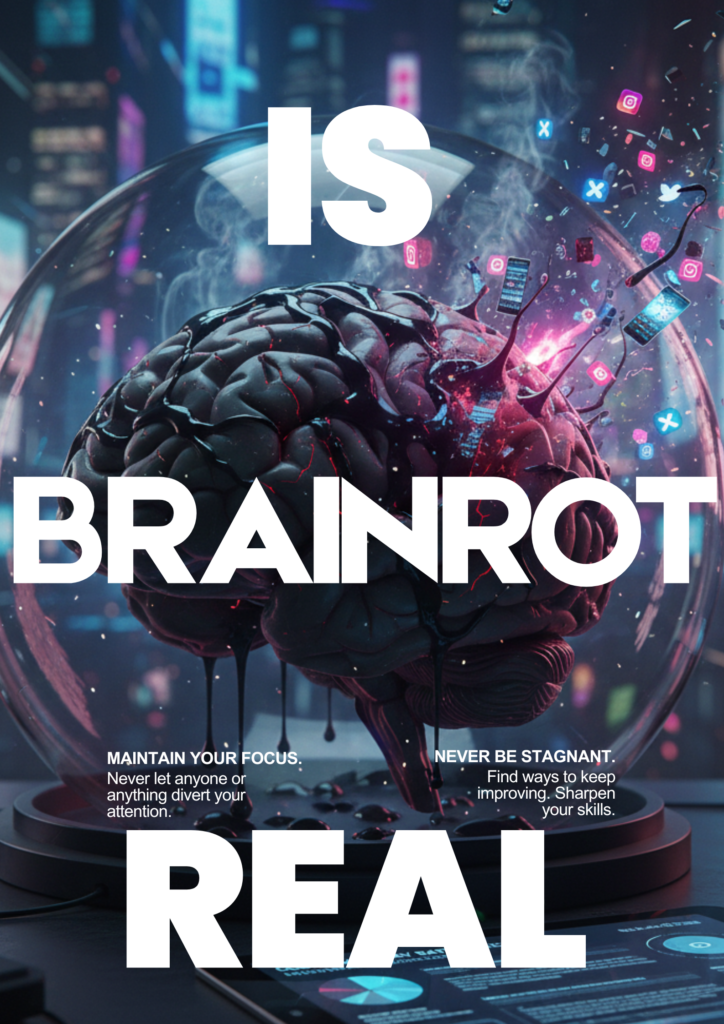
Do you feel like your memory isn’t as sharp? Panicked over a dead battery? You might be experiencing brain rot. Discover how reels are changing your mind.
Do you listen to music all the time—while studying, eating, traveling, or even sleeping? Furthermore, does silence feel uncomfortable or awkward?
When was the last time you watched a full movie without checking your phone? Is your brain constantly craving something new—another video, another post, another scroll? In fact, are you falling into the trap of Italian Brain Rot?
Italian brain rot is a viral internet subgenre of surreal, AI-generated memes that emerged in early 2025. It is characterized by bizarre animal-object hybrids with rhyming, Italian-sounding names and nonsensical, often overstimulating narration.
Well, I’m here to answer all your questions about Brainrot .
What Is Brain Rot?
Brain rot is a term used to describe the slow decline of our ability to focus, think deeply, and stay present. This is caused by constant exposure to short-form content, endless scrolling, and nonstop digital stimulation.
Essentially, it doesn’t mean the brain is actually rotting. Rather, it describes a state where the mind becomes overstimulated and addicted to novelty. Consequently, this makes silence, boredom, and deep attention feel difficult.
The term was popularized by Gen Z and became widely used online to describe the mental effects of excessive screen consumption. In addition, in 2024, “brain rot” was recognized as Oxford’s Word of the Year, reflecting how deeply this issue resonates with modern digital life.
RECENT STUDIES
- First, our on-screen attention span has dropped from 2 minutes 30 seconds in 2004 to just 47 seconds today.
- Second, adults spend over 6.5 hours a day on screens.
- Third, teenagers spend more than 9 hours daily on screens.
- Finally, each interruption can take 20–25 minutes for the brain to fully recover.
Physical Brain Changes
EVOLUTION OF BRAIN
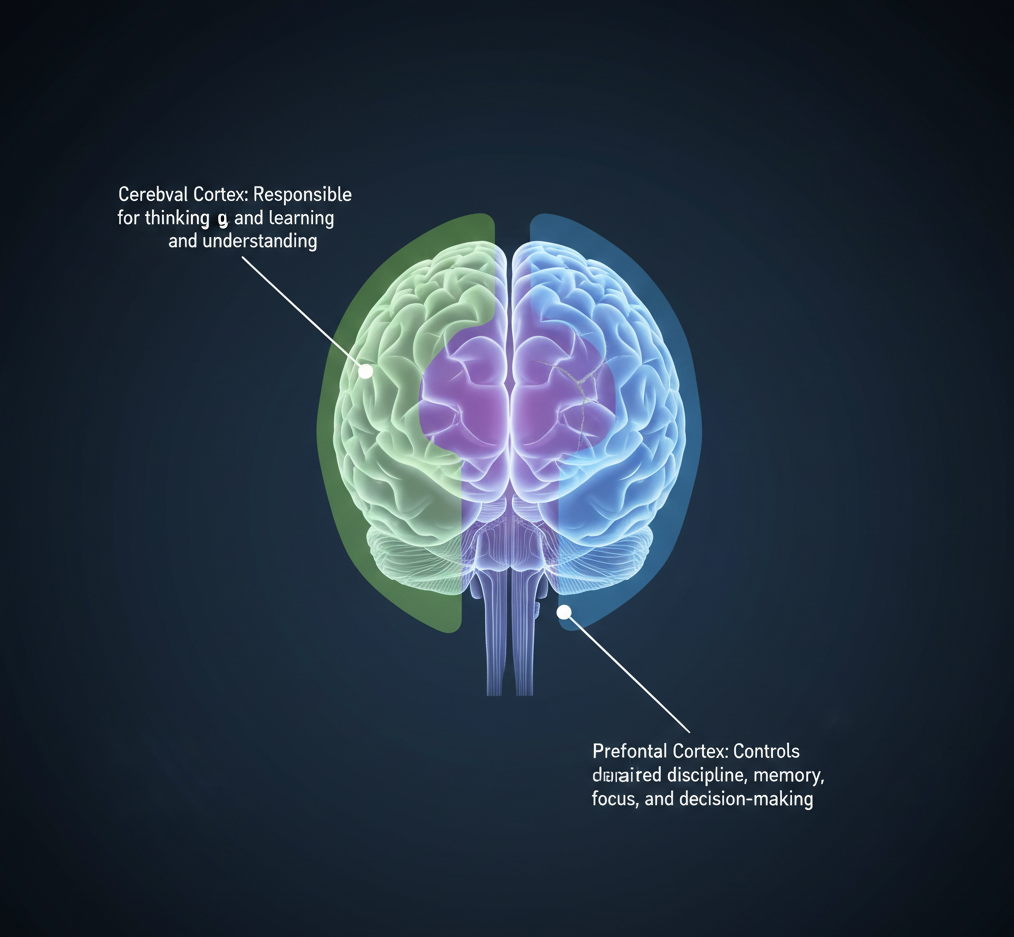
Our brain did not evolve for constant screens. Instead, for thousands of years, it evolved to handle slow information and long periods of calm.
Cerebral Cortex Thinning
The cerebral cortex is responsible for thinking, learning, and reasoning. However, it weakens when deep thinking is used less frequently—just like a muscle that isn’t exercised.
Prefrontal Cortex Overload
The prefrontal cortex controls discipline, memory, and focus. Unfortunately, constant stimulation overloads it, making patience and self-control harder.
In simple words, the brain evolved for depth, but screens train it for speed and constant switching.
Causes of Brain Rot
1. Endless Scrolling and Short-Form Content
You open Instagram to check one message. Then, a reel starts playing. Ten minutes turn into an hour. As a result, you don’t remember most of what you watched.
Why It Happens: Short-form content constantly changes visuals. Today, it trains the brain to expect instant stimulation, making slow tasks feel boring.

2. Constant Dopamine Hits and Multitasking
You sit to study a chapter. Suddenly, a notification buzzes. You check it, scroll posts, and an hour has passed. Therefore, constant switching keeps the brain alert but exhausted.
3. Algorithm-Driven Content and Early Screen Exposure
Algorithms push fast content to maximize engagement. Additionally, children exposed to screens early develop brains wired for instant stimulation. In fact, experts recommend zero screen time for children under 2.
4. Over-Reliance on AI
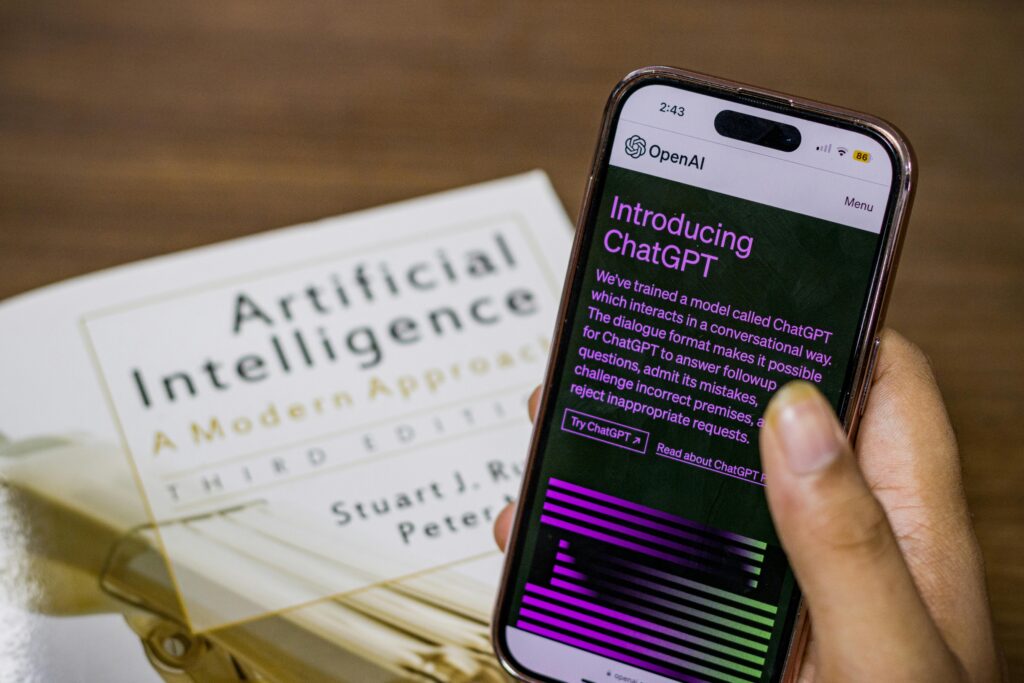
AI gives instant answers. Consequently, it reduces the need to think or plan. Over time, this weakens critical thinking and independent problem-solving.
5. Lack of Mental Rest
The brain needs downtime to form memories. However, constant stimulation leaves little space for recovery. This results in mental fatigue.
The Power of Positive Thinking: Change Your Life in 2026
Have you ever wondered… Why one criticism ruins your entire day? Why your mind replays…
How to Build Self-Discipline: 7 Proven Steps to Success
How to build self-discipline is probably something you’ve searched for after breaking yet another promise…
Anxiety Management Made Simple
Do you ever feel anxious even when nothing seems wrong? Does your mind jump to…
Is Brainrot real ?
Do you feel like your memory isn’t as sharp? Panicked over a dead battery? You…
MEDITATION FOR OVERTHINKING ?
“If you struggle with a racing mind, using meditation for overthinking can help you find…
5 Proven Strategies to Reduce Stress and Boost Workplace Well-Being
Hey friends!, let’s be real—work can be stress city sometimes. You’ve got endless emails, back-to-back…
6. Fear of Silence and Boredom
Music and videos fill every quiet moment. Because of this, silence becomes uncomfortable, making deep thought difficult.

Why You Must Overcome Brain Rot
We’re entering an era where cognitive capital is more valuable than money. Specifically, people who can sustain deep focus will be the New Rich, while those addicted to distractions risk becoming the New Poor.
Focus is your superpower. Nevertheless, brain rot quietly steals it. Shallow attention steals not just time, but life itself. In short, mental rest is essential for creativity.

The New Rich will reclaim focus; meanwhile, the New Poor will stay overstimulated.
Reversing Brain Rot: A Framework for Cognitive Recovery
The brain is plastic—it can rewire itself for deep focus. However, this requires conscious effort and repeated practice. To reclaim our attention, we need strategies that respect our evolutionary wiring.
1. Mindset and Acknowledgment
Before doing anything, you have to admit there’s a problem.
- Admit the Problem: Recognize that digital consumption is affecting your memory.
- Assess Your Level: Next, track your screen time to establish a baseline.
2. Digital Fasting and Dopamine Rebalancing
Resetting your reward system is critical.
- Digital Fasting: Dedicate 1–3 hours daily to complete device-free time.
- Intentional Boredom: Spend 30–60 minutes doing nothing. This restores your natural rhythm.
3. Training Focus (Progressive Overload)
Focus is like a muscle. Therefore, rebuilding it requires deliberate effort.
- Start Small: Read for 10 minutes without interruption.
- Pomodoro Technique: Also, work in 25-minute focused blocks.
- Single-Tasking: Complete tasks fully without multitasking.
- Memory Challenges: Finally, memorize lists to strengthen working memory.
4. Environmental Design
Chaos in your surroundings translates to chaos in your mind.
- Create Friction: Keep your phone out of reach while working.
- Declutter: A tidy workspace promotes mental clarity.

5. Mindful Consumption and Curation
We must actively filter what we consume.
- Eliminate Junk: Unfollow low-value accounts.
- Practice Intentionality: Before opening an app, ask: “Am I learning or escaping?”
6. Device Modification
Adjusting device use reduces overstimulation.
- Grayscale Mode: Additionally, make the phone less visually stimulating.
- Turn Off Notifications: Only allow essential contacts.
- Physical Separation: Charge your phone in another room.

7. Engage with the Real World
Passive screen consumption cannot replace the real world.
- Analog Hobbies: For instance, play an instrument or hike.
- Connect with Nature: Spending 20 minutes outside improves attention.
8. Establish Routines
Consistent routines help counter overstimulation.
- Low-Stimulation Mornings: Start with meditation or a walk.
- Power Hour: The first hour after waking should be screen-free.
- Evening Digital Sunset: Finally, avoid screens 1–2 hours before bed.

CONCLUSION
In conclusion, brain rot is not permanent. With intentional digital fasting and focus training, you can retrain your brain to enjoy calm.
The New Rich will be those who reclaim focus and cognitive resilience. Conversely, the New Poor will be the distracted, chasing instant gratification while the world moves forward.