“If you struggle with a racing mind, using meditation for overthinking can help you find peace. Here are 11 proven strategies to help you calm down today.”
- Causes of Overthinking
- How to Fix Overthinking
- 1. Solomon’s Paradox
- 2. Expressive Writing
- 3. Creating Space to Reflect
- 4. Organizing Your Physical Space
- 5. Meditation for overthinking
- 6. Sensory Grounding Exercise
- 7. Rituals and Structured Routines
- 8. Green Space Exposure
- 9. Sleep Primer
- 10. Hugging and Physical Connection
- 11. Talking and Explaining to Others
- Conclusion

Hi friends!
Today, I have come with one of the most common topics we all struggle with—overthinking.
Are you someone who keeps thinking:
- “What if I forget everything? What if I mess up in front of everyone?” — before exams or presentations
- “Did I sound rude? Did they misunderstand me?” — after sending a message or email
- “What if they ask a question I can’t answer? What if I look unprepared?” — during job interviews or meetings
If yes, I know exactly why you clicked on this article. Most people we meet keep saying that meditation is the answer to all our overthinking. Yes—it is, and sometimes, it isn’t the only answer.
In this blog, you’ll find some of the most effective solutions, backed by psychology and real-life experience. So, read till the end.
Causes of Overthinking
1. Your Brain Is in Survival Mode
Did you know our brains are wired to focus more on the negative? Why? Isn’t that stressful?
Yes—but there’s a reason. Early humans who noticed threats—like predators or dangerous terrain—were more likely to survive. Those who didn’t… didn’t make it. This is known as negativity bias.
So why do we still worry about work emails or past mistakes? Because your brain treats modern stress the same way it once treated life-or-death threats. Research shows that negative events affect the brain 2–3 times more strongly than positive ones (Baumeister et al., 2001). The amygdala, the brain’s danger detector, becomes active whenever it senses a threat—real or imagined.
In simple terms: Your brain is in survival mode, reacting to psychological stress the same way it would react to a predator—trying to protect you, even when the danger isn’t real.

2. Negative Self-Talk
One of the main reasons people overthink is negative self-talk—the critical, repetitive thoughts we say to ourselves. It keeps the mind stuck in loops of worry and doubt. Negative self-talk usually appears in three forms:
- Rumination: Replaying past mistakes repeatedly without learning from them. (Example: “Why did I do that? I should have done it differently.”)
- Worry: Obsessing over the present or imagining future problems. (Example: “What if this happens? What if I fail?”)
- Self-Beratement: Harsh inner criticism that attacks confidence and self-worth. (Example: “I’m so stupid. I can’t do anything right.”)

3. Fear of Failure
Fear of failure is a major reason people overthink. When we worry about making mistakes or not meeting expectations, the mind gets trapped in endless “what if” scenarios.
Psychologists explain that fear of failure is closely linked to perfectionism and anxiety. The desire to avoid mistakes becomes so strong that it creates unnecessary mental loops. Over time, this fear fuels stress, self-doubt, and chronic overthinking, making it harder to take action confidently.
4. Lack of Control
Another major reason people overthink is a lack of control. When situations feel unpredictable or out of our hands, the mind tries to regain control by analyzing every possible outcome.
Psychologically, this is linked to catastrophizing—imagining the worst-case scenario. The brain keeps overanalyzing to feel safe, even when the situation cannot be fully controlled. This leads to anxiety, mental exhaustion, and constant worry.

The Power of Positive Thinking: Change Your Life in 2026
Have you ever wondered… Why one criticism ruins your entire day? Why your mind replays…
How to Build Self-Discipline: 7 Proven Steps to Success
How to build self-discipline is probably something you’ve searched for after breaking yet another promise…
Anxiety Management Made Simple
Do you ever feel anxious even when nothing seems wrong? Does your mind jump to…
Is Brainrot real ?
Do you feel like your memory isn’t as sharp? Panicked over a dead battery? You…
MEDITATION FOR OVERTHINKING ?
“If you struggle with a racing mind, using meditation for overthinking can help you find…
5 Proven Strategies to Reduce Stress and Boost Workplace Well-Being
Hey friends!, let’s be real—work can be stress city sometimes. You’ve got endless emails, back-to-back…
How to Fix Overthinking
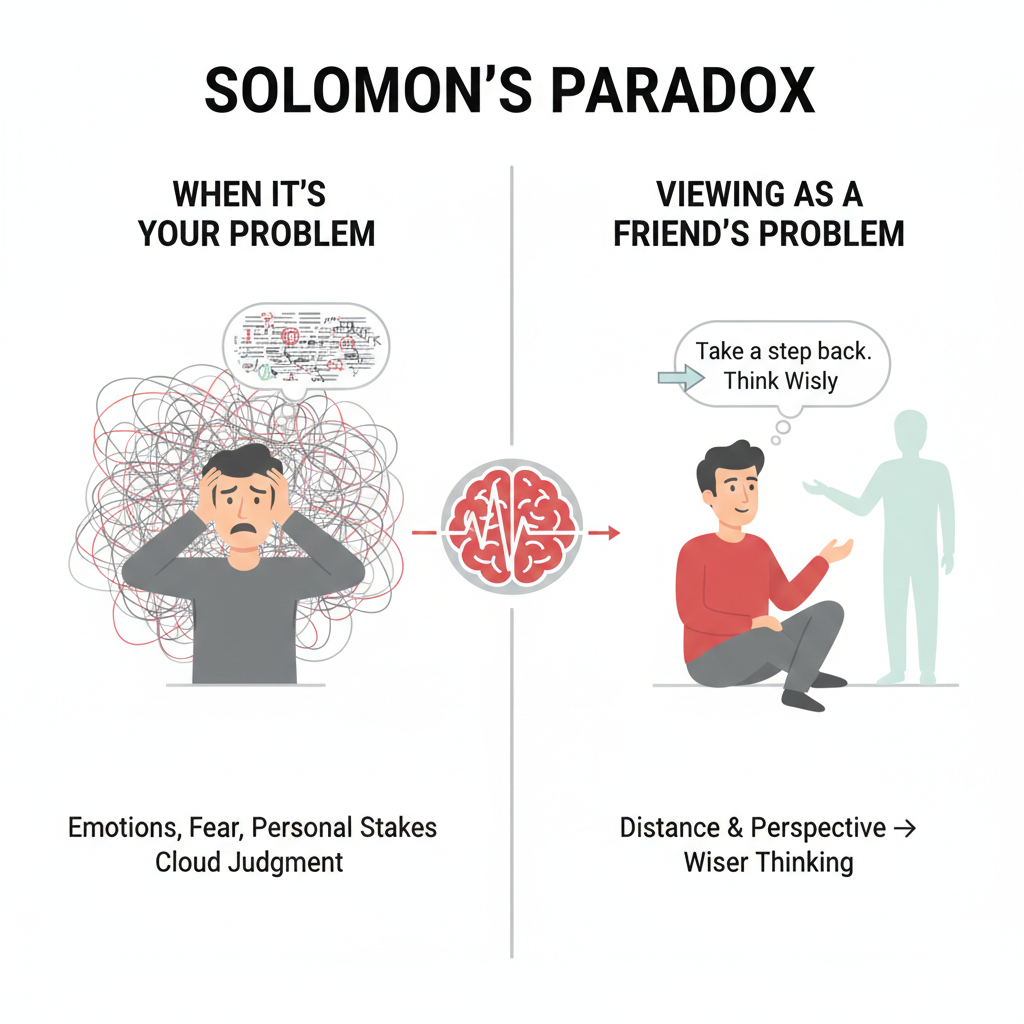
1. Solomon’s Paradox
Have you noticed how it’s easier to give great advice to a friend than to yourself? That’s because when it’s our problem, emotions, fear, and personal stakes cloud our judgment.
Research shows that stepping back and viewing your problem as if it belongs to someone else leads to wiser thinking. Meditation and mindfulness help by teaching the mind to observe thoughts without getting trapped in them.
2. Expressive Writing
Expressive writing involves writing continuously for 15–20 minutes about your deepest thoughts and feelings related to a problem. Grammar and structure don’t matter. Writing helps organize the mental “jumble” by turning scattered thoughts into a clear narrative.
3. Creating Space to Reflect
This involves stepping back from a problem and viewing it through time. Ask yourself:
- “Will this matter in a week, a month, or a year?”
You can also look backward—recalling a time when you overcame a bigger challenge, or thinking of someone you admire who faced difficulties.

4. Organizing Your Physical Space
Cleaning your room, desk, or surroundings can calm an overactive mind. When thoughts feel chaotic, external order provides a sense of control and stability. Writing down your thoughts alongside organizing your space helps clear mental clutter and reduce stress at workplace .
5. Meditation for overthinking
Breathing exercises and meditation regulate the nervous system. Slow breathing stimulates the vagus nerve, activating the parasympathetic nervous system—the body’s calm mode.
Simple techniques:
- 4–6 Breathing: Inhale 4 seconds, exhale 6 seconds
- Box Breathing: Inhale–hold–exhale–hold (4 seconds each)
- Diaphragmatic Breathing: Deep belly breathing to reduce tension

women meditating for overthinking
6. Sensory Grounding Exercise
When overthinking pulls you into the past or future, grounding brings you back to the present. Try this:
- 4 things you can touch
- 3 things you can see
- 2 things you can hear
- 1 thing you can smell or taste

7. Rituals and Structured Routines
Rituals and routines help calm an overthinking mind by giving a sense of order and predictability. When thoughts feel chaotic, doing the same set of actions regularly helps the brain feel in control.
Examples include grieving rituals or athletes’ pre-game routines, which provide emotional grounding and focus. Even small daily routines—like journaling at night—can ground the mind.

8. Green Space Exposure
Spending time in nature captures your attention gently, letting your brain rest and recharge. This creates a sense of “shrinking of the self,” where your personal worries feel smaller. Nature helps your mind relax, reduces stress, and restores clarity.

9. Sleep Primer
A sleep primer is a simple bedtime routine that helps your mind and body get ready for rest. It can include dimming lights, avoiding screens, or focusing on only one thing, like your breath. This stops your mind from jumping between worries and reduces nighttime rumination.Understood! Here are those two additional sections formatted to match the style of your blog for your Hostinger site.

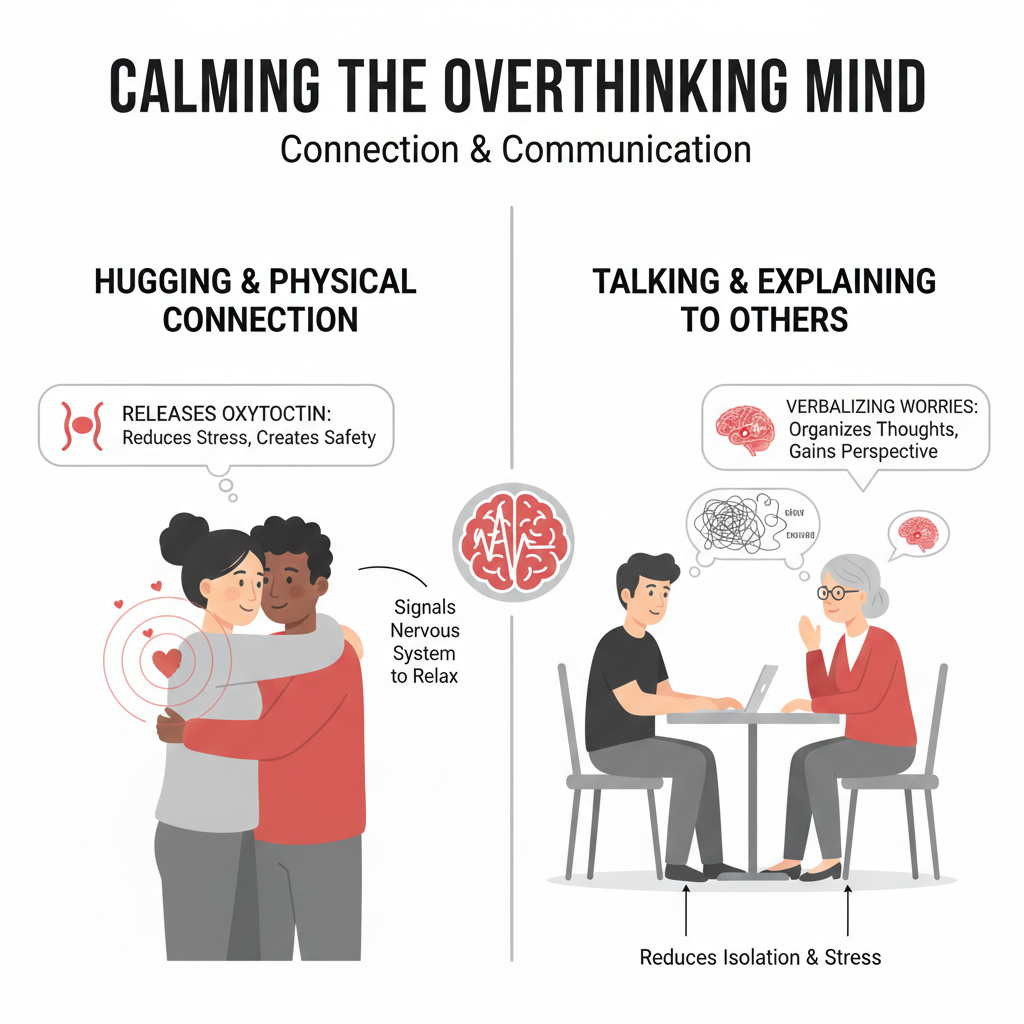
10. Hugging and Physical Connection
Physical touch, like hugging a loved one, can help calm the mind. Hugging releases oxytocin, often called the “love hormone,” which reduces stress and creates a feeling of safety and comfort. Even a quick hug or holding hands with someone you trust signals your nervous system to relax and reduces mental chatter.

11. Talking and Explaining to Others
Sometimes, the best way to calm an overthinking mind is to talk about it. Explaining your thoughts and worries to a friend, family member, or mentor helps you process emotions, gain perspective, and organize your thoughts.
When you verbalize worries, they become less overwhelming and easier to handle. This also allows others to offer advice or simply listen, which can reduce feelings of isolation and stress.
Conclusion
I hope these tips have helped you understand why overthinking happens and how to manage it. These are proven strategies and long-lasting solutions that really work. I hope you enjoyed reading this, and stay tuned for more helpful tips on making your life easier, calmer, and more enjoyable!
“A moment of self-compassion can change your entire day. A string of such moments can change the course of your life.”
Christopher Germer
LOVELY Mam, Great that got such a good info today
Thank you . keep reading .
Pingback: Brainrot meaning: Is your brain actually cooked?